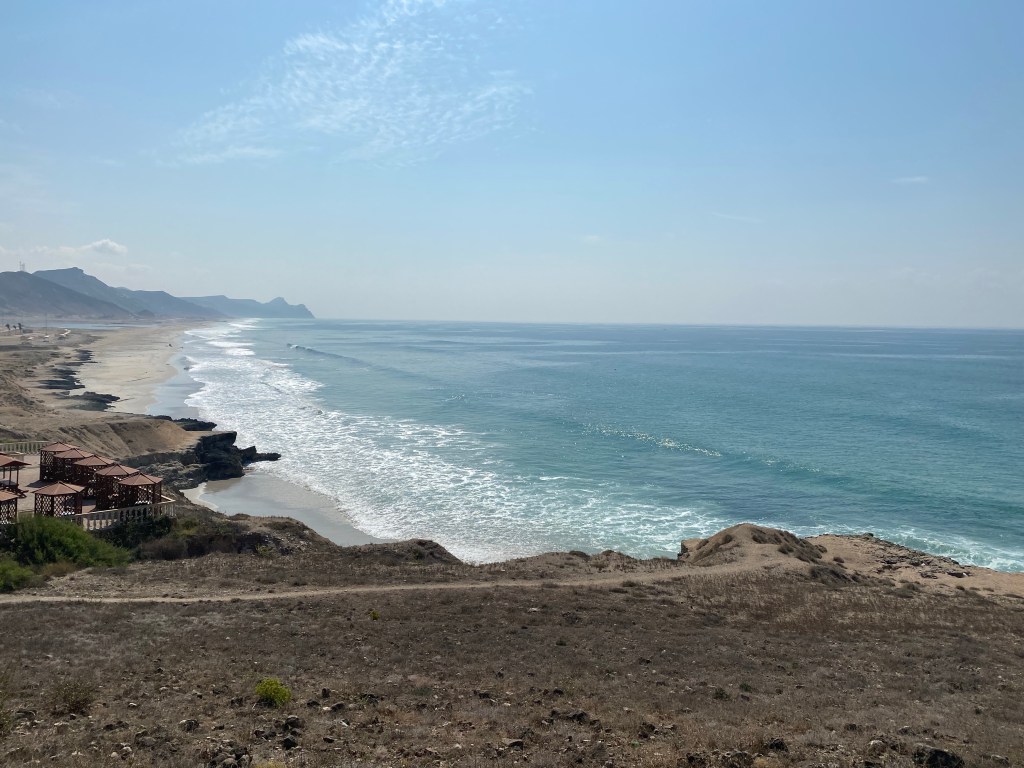
It is no surprise that tourism is the fastest growing industry in Oman. Their beaches alone are so beautiful and plentiful and it is one of the cleanest countries we visited up to now, and no one is sleeping in the streets. The landscape looks rather barren with its gravel desert and hills full of gypsum when we visited, but we were assured that when the monsoons start in June, bringing moisture in from the Indian Ocean, the area would turn lush and green almost overnight.
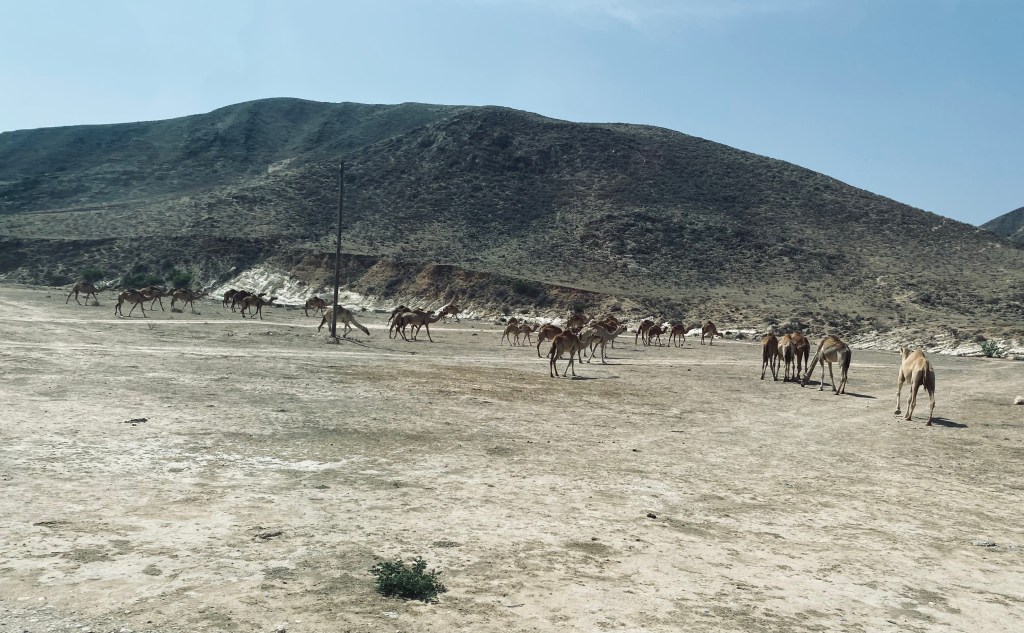
The camels seem to know when the monsoons are coming and they start arriving in this area waiting for the lush green grasses. We saw so many camels, and they seem to wander around at will. Our guide told us that if you are mean or hit a camel, twenty years later he will remember you and the males especially can be very mean. In October all the camels go back to the mountains and it is a celebration of the end of monsoon season.
The population of Oman is approximately 4.5 million. The official language is Arabic. But English is widely spoken in the cities and in areas that have tourism. Visitors come from all over the world. It is considered a safe country to visit. Crime rate is low and violent crimes against tourists are rare. Sharia law is in place and indeed they have their own courthouse to deal with any issues. It is a Muslim country and people are called to prayer five times a day. Oil, tourism, gypsum and agriculture make up the basis of their economy. Frankincense is also a large industry. It is not only exported, but every home here will have it. They burn it. It purifies the air and repels insects. They put it in water and drink it as a health drink and the sap is collected from the boswellia tree.

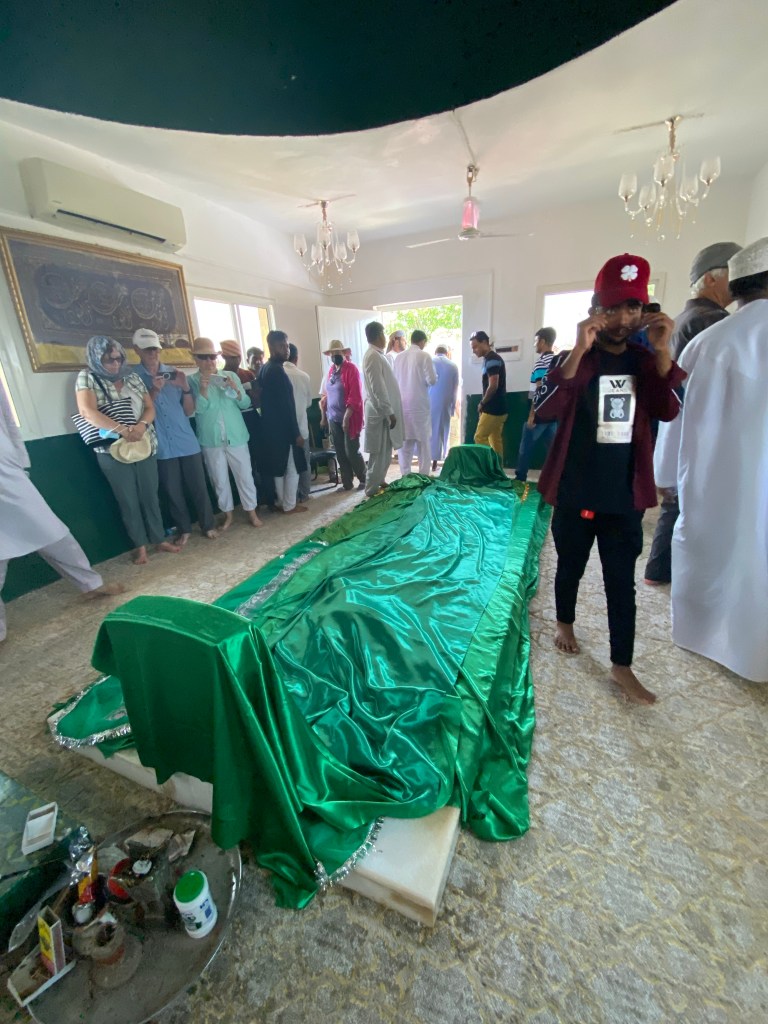
We visited the tomb of Job near Salalah, which is a religious shrine here. It is believed he is buried somewhere in the neighbour of the tomb. I have realized on this trip that we all worship one god, whether it be Mohammed, Spirits, Jesus, or whomever, and that many of our religious stories are similar, ie the story they tell about Job and how he is revered here in this Muslim country.
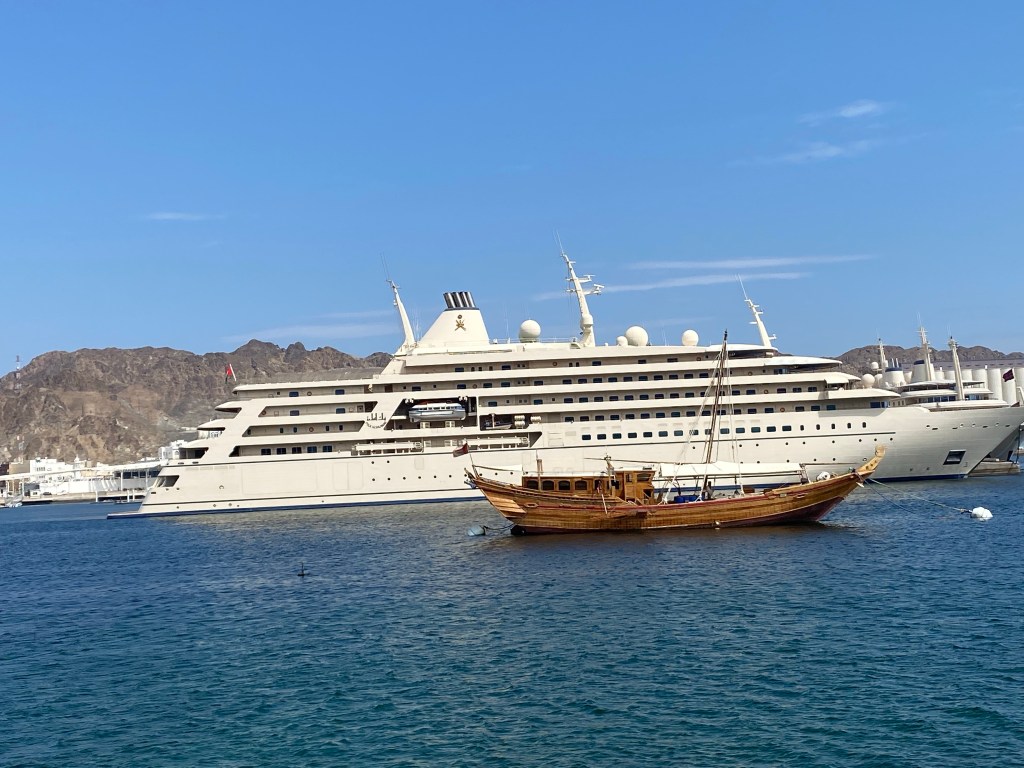
Muscat is the capital and most populated city of Oman and the largest port in Muscat is Sultan Qaboos port. However, the port in Salalah is the largest port in Oman. I had visited Muscat previously, so opted for the hop-on, hop-off bus to reacquaint myself with this lovely city.


 patriciawatt
Leave a reply to patriciawatt8 Cancel reply