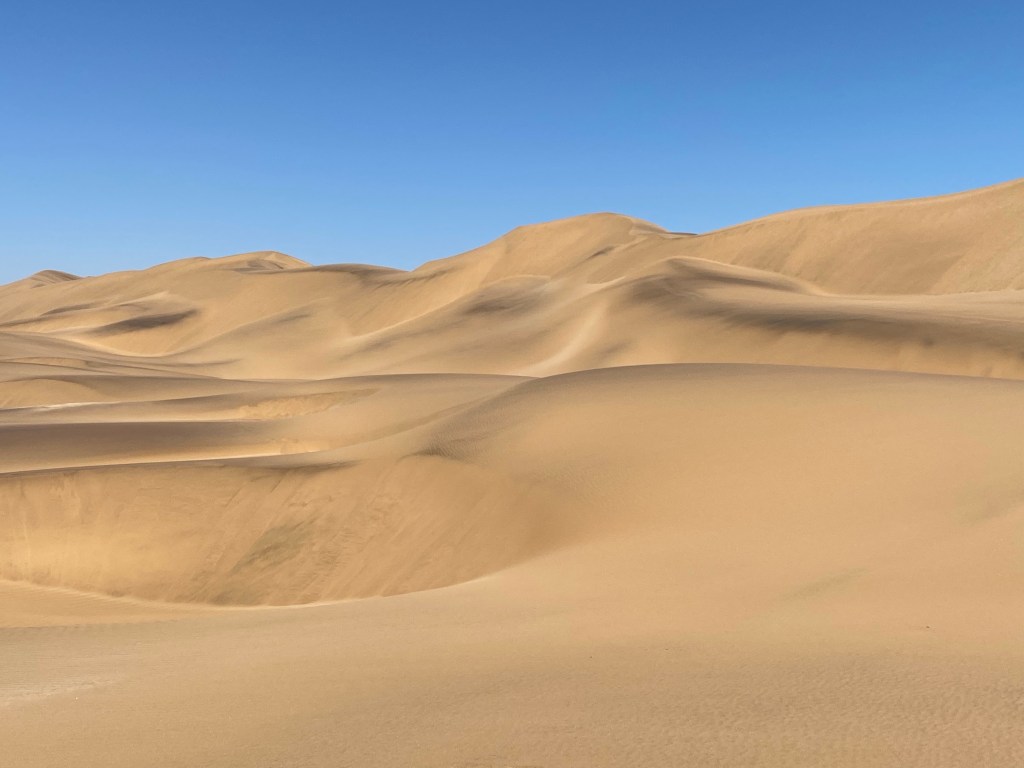
We visited Namibia with stops in Walvis Bay and Luderitz. The name of the country is derived from the Namib desert, the oldest desert in the world. Before its independence in 1990, it was known as German South West Africa (Deutsch-Südwestafrika). After the Namibia War of Independence in 1990 they gained their independence, and its capital and largest city is Windhoek. Today Namibia is one of the least populated countries in the world with approximately two and a half million people and it has a stable multi-party parliamentary democracy. Agriculture, tourism and the mining industry, including diamonds, uranium, gold, silver and base metals form the basis of its economy.
Namibia is famous for having the highest sand dunes in the world. A visit to Dune number 7 is a must. It is also known for its marine diamonds. A diamond rush was sparked back in the early 1900s, but long gone are the days when you could find lose diamonds lying on the beach. The coastal area where they may be found is now a prohibited area controlled by DeBeers along a 180 mile stretch of coastline called Diamond Area No. 1. Old maps from the days of German rule called it “Sperrgetbeit” – Forbidden Area. DeBeers finds fewer diamonds on the beach these days by bull dozing tons and tons of sand and have moved into underwater mining from the ocean floor.
From the desert one day to the water the next and a wonderful cruise around the area with pelicans, birds and seals galore.



 patriciawatt
Leave a reply to Hedy Boutros Cancel reply