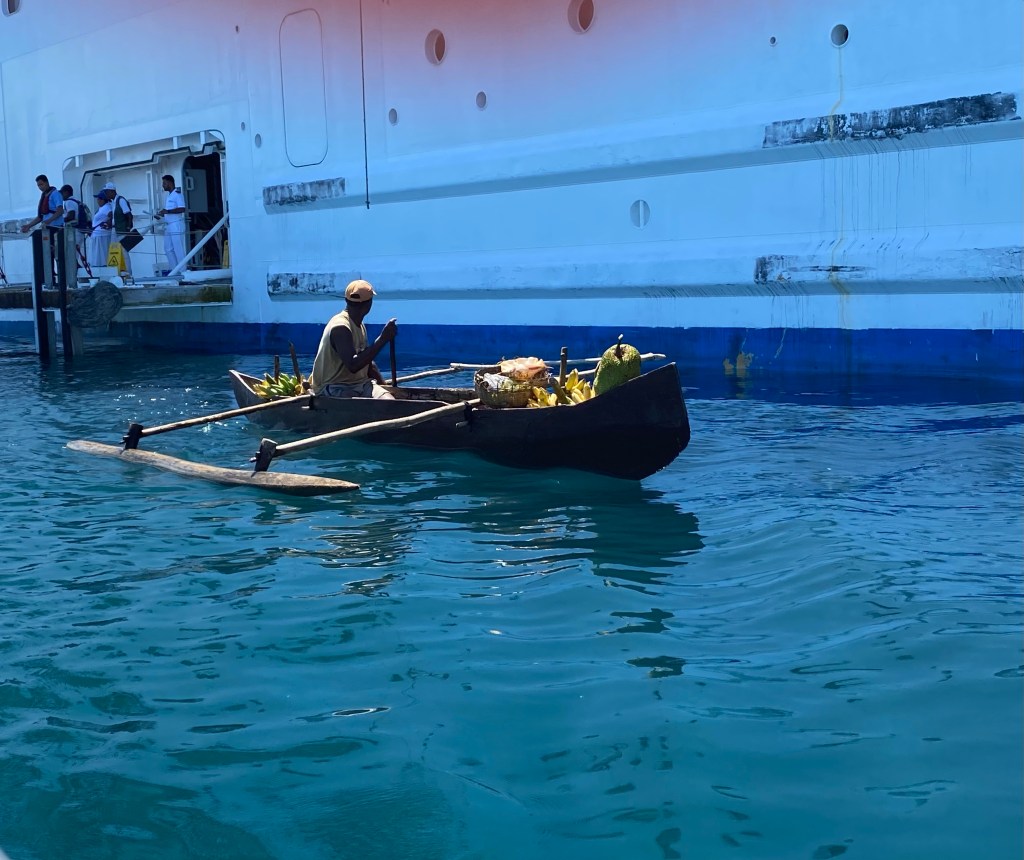
On our 2018 cruise, one of the big disappointments was we were not able to get into Madagascar. The ship cited ‘weather’, but we had also heard they had an outbreak of the Black Plague. Whatever the reason, I guess they were both good ones. But this time the weather is perfect, sunny with blue skies and calm seas. Our tender picked us up at the ship and we set off for Nosy Be and Lemurs. It is hot but worse, it is really humid. However, out on the water it is beautiful and we reach Nosy Be before we know it. From the water, we could see what looks like a fairly primitive village. They do have solar panels on some of the makeshift huts, but other than that we learn there is no electricity, no cars and I am not sure about indoor bathrooms!
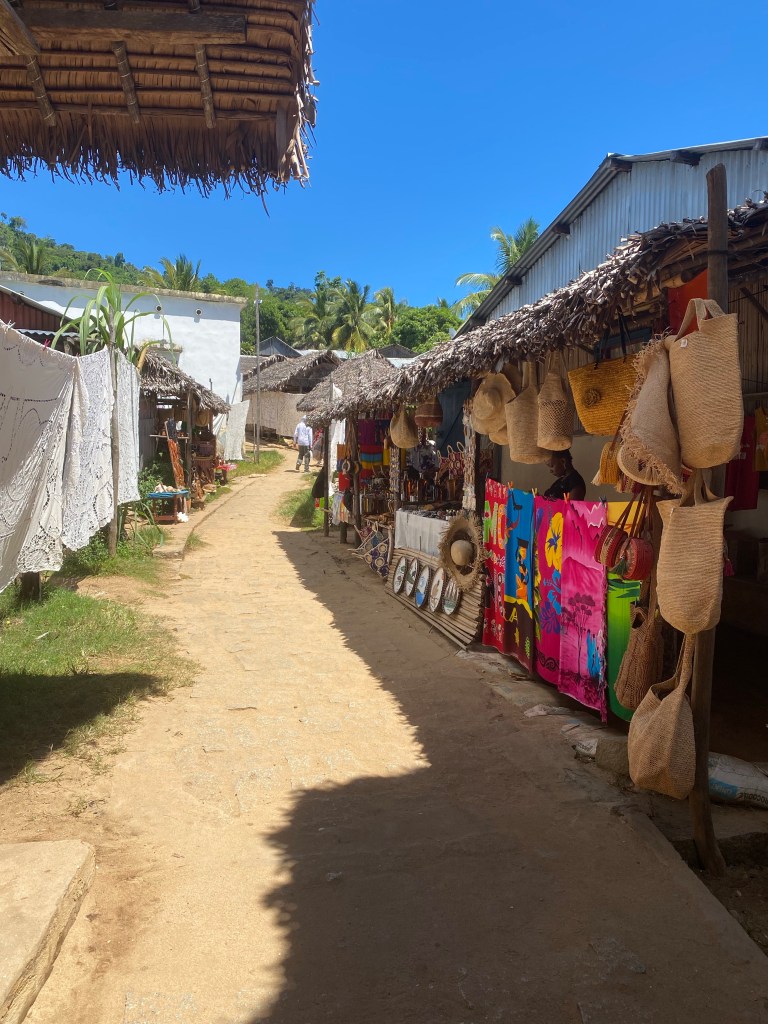
We wade ashore, and with the humidity, it is not long until the ends of your hair are dripping with sweat and we haven’t even started our trek up the winding trail to find the lemurs. The residents here are beautiful, friendly and it seems talented. We pass shop after shop of beautiful dresses, jewellery, tablecloths, pareos, hand woven baskets & bags, and wood carvings as we make our way through the village. Here like so many of our stops, the locals are so happy to have the tourists back again after covid. It’s been tough for so many.
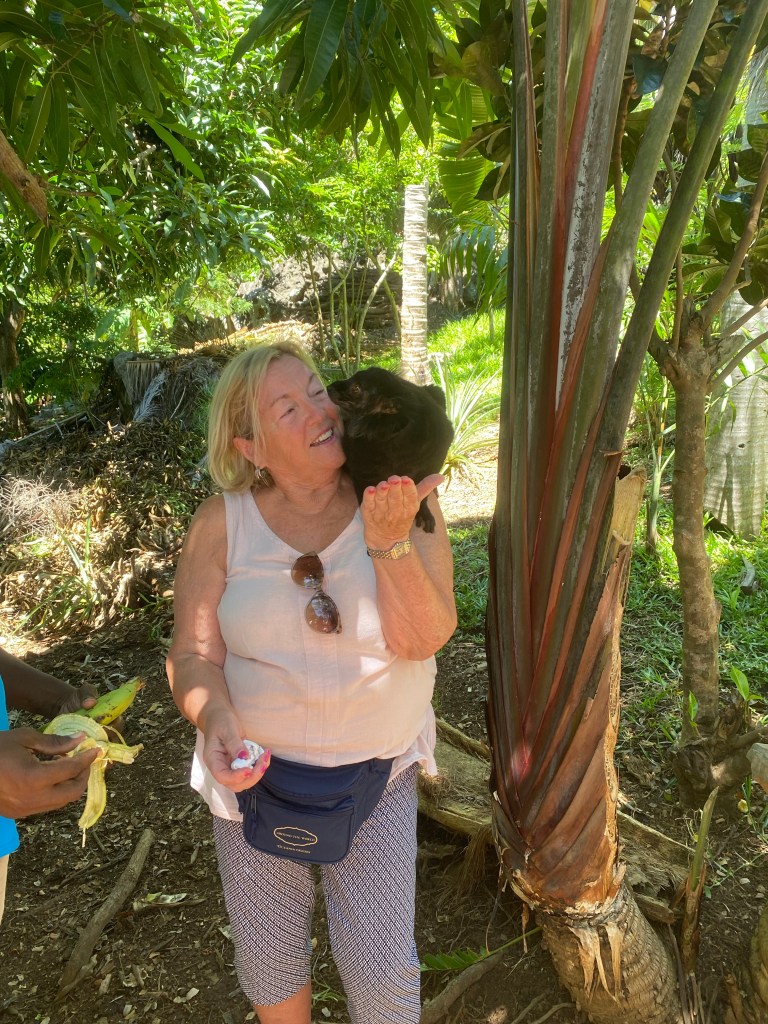
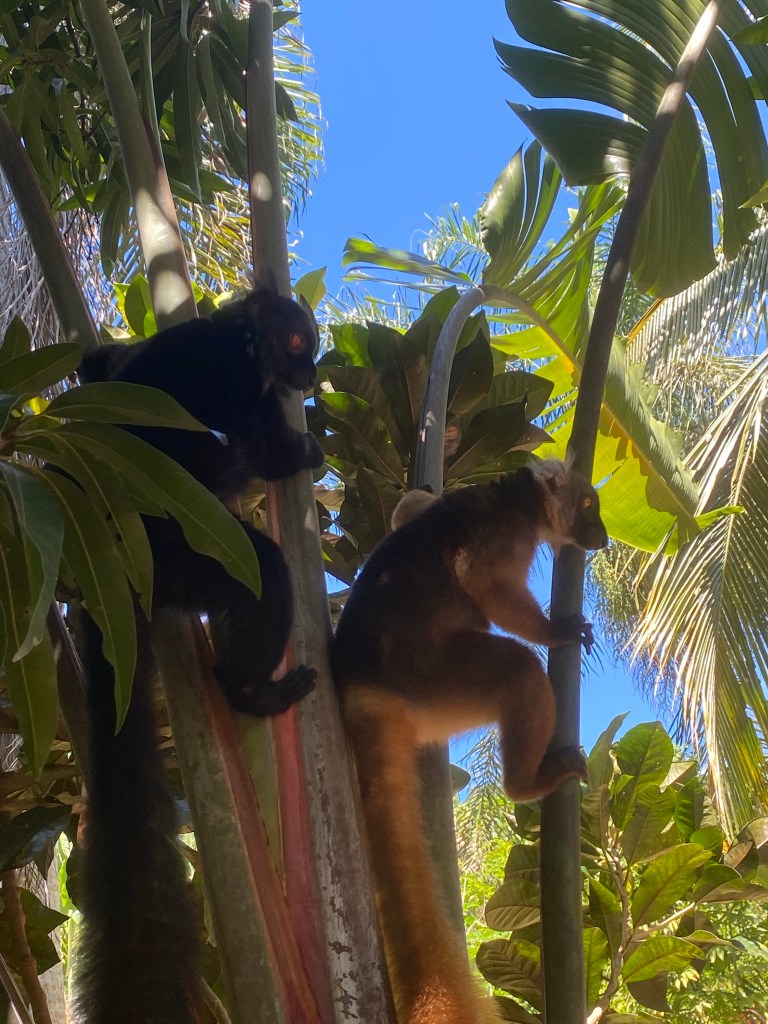
After a bit of a trek, we see our first lemurs, and our guide gives us sliced bananas to feed to them so they will come down out of the trees and perch on our shoulders. On this island, we did not see the black & white lemurs that are most often photographed in magazines. But we did see the ‘Aye-Aye’ or proper but harder to pronounce name, Daubentonia Madagascariensis!! They are so cute and so gentle and so interesting with their huge eyes, rat like teeth and a long middle finger for digging bugs out of the bark of trees. But they are also endangered. As more and more of the forested areas are cut down, they are losing their habitat and declining in numbers. There is also widespread persecution by native Malagasy who believe they are a harbinger of bad luck. How could this cute little monkey be considered bad luck?
Interesting fact: Before French colonial rule, Madagascar was ruled by a woman. The French annexed Madagascar in 1897, and they gained their independence from France in 1960. Most of the people speak Malagasy, the national language, but French is also widely spoken and is officially recognized. English is also becoming more prominent. It is the world’s fourth largest island and is located in the Indian Ocean, separated from the east coast of Africa by the Mozambique Channel. It has a population of approximately 28 million and has one of the world’s highest poverty rates. Population increase is the main cause for the poverty, putting pressure for housing and farming on available land, so hundreds of hectares of forest and rainforest have been cut down to supply that land creating great areas of erosion.
Madagascar has developed its own distinct ecosystems and extraordinary wildlife since it split from the African continent about 160 million years ago. Approximately 95% of its reptiles, 89% of its plant life, and 92% of its mammals exist nowhere else on earth and there are 40 different species of lemurs on the island.
 patriciawatt
Leave a comment